Anthony Burgess on Three Means of the Knowledge of God

Posted on 16. May, 2013 by .

0

Natural theology is often a hotly debated topic in contemporary Reformed theology. Proponents of natural theology often argue that we can establish the building blocks of biblical Christianity by reading the “book of nature” and then adding divine revelation from Scripture in order to bring the gospel to sinners. In his recent book, Shapers of English Calvinism (Oxford, 2010), Dewey Wallace argues that this constructive use of natural theology arose with the advent of the Enlightenment and that it was not the normal pattern in earlier Reformed orthodoxy. It was a radical shift in Reformed theology introduced by radical (and often eccentric) figures, such as Richard Baxter.

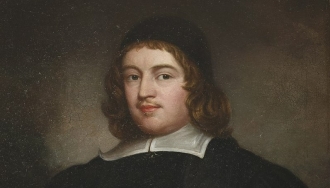
One way to highlight the Enlightenment shift in attitude to natural theology in Reformed theology is to consider how seventeenth century Reformed authors defined their terms. While post-Enlightenment natural theology ordinarily entails deducing truth from the “book of nature,” some seventeenth century authors used this term to refer to the innate knowledge of God in man that leaves him without excuse before his Creator. The Westminster divine, Anthony Burgess, illustrates this point well.

Burgess argues that we come to the knowledge of God in three ways:

1. The book of nature. This is “implanted or engrafted knowledge.” This “book” is not a means by which sinners obtain knowledge of God. It is the means through which they already possess knowledge of their Creator by virtue of being created in God’s image. Relying on Romans 1, Burgess concludes from the role of the “book of nature” that Atheism results from sinful behavior rather than intellectual investigation: “No man is or can be a natural Atheist; in affections he may be, wishing there was no God, but in judgment he cannot, till by accumulated sins he hath given himself up to all stupidity” (Burgess, Sermons on John 17, 91).

2. The book of the creatures. This is “acquired knowledge.” Relying on Paul’s interaction with the Athenian philosophers in Acts 17, Burgess concludes that the “book of the creatures” is never helpful in bringing men to salvation, but only in sealing their damnation. Referring to Paul’s reference to the alter to “the unknown God,” he argues that the “book of the creatures” can teach men that there is one supreme God above others, but that by these means, people have “no true apprehensions” of God (91). The “acquired knowledge” that people receive through the “book of the creatures” functions in a purely negative way. It did not serve the purpose, for Burgess, of convincing unbelievers by constructing positive theological conclusions. The uncertainty of this knowledge of God was a means of convicting them of ignorance, superstition, and idolatry.

3. The book of God’s Word. This is “revealed knowledge.” This alone teaches us how to know and to worship God. Burgess did not merely stress here the necessity of Scripture for the true knowledge of God, but the exclusivity of Scripture. This is the only means of knowing God that permits positive theological construction.

These definitions of terms are helpful. They do not teach us what is right or wrong or what we should or should not believe about natural theology. However, it is all too easy, as the proverb goes, to peer into the well of history and see our own reflections. Sometimes modern Reformed proponents of using natural theology for constructive theological purposes act as though this has always been the standard Reformed position. This was not always the case, especially prior to the Enlightenment. The value of history is that is helps us criticize ourselves in light of Scripture from someone else’s perspective. Further study in this area will be fruitful in helping us be more constructively self-critical.


Continue Reading

Book Interview with Ryan McGraw

Posted on 15. May, 2013 by .

0

Below is a link to an interview with Bill Hill from GPTS on one of my recent books, By Good and Necessary Consequence. The book is short and targets a popular audience. It aims to teach people how to draw theological and practical conclusions from the Bible.This is not exactly a Puritan related book, but I do have a chapter that provides a popular-level sketch of biblical interpretation in the middle ages and how the Westminster divine both adopted and modified this model.

Here is the Link:

http://confessingourhope.com/blog/2013/05/15/by-good-and-necessary-consequence/

Continue Reading

Preaching and Prayer: Anthony Burgess on why we are “Stupid Blocks”

Posted on 25. Apr, 2013 by .

0

Preaching and Prayer must be inseparable. The Westminster Divine, Anthony Burgess, gave the church the following challenge to pray in preparation for the preaching of the Word:

“Canst thou pray in other things and not here? Is not every sermon of eternal consequence? Is not heaven or hell delivered at this time, why then are we such stupid blocks as to lay fast hold on God and say, I will not let thee go till thou givest me a blessing; It’s taken up as a sad question, Why in these latter days the Word preached makes no more wonderful works? . . . What is the matter? Is not the Word as powerful as ever? Is not the Lord’s arm as strong as ever? Yes, but the zeal of people is grown cold; There are not such fervent prayers, such high esteems of the means of grace; Men do not besiege heaven, giving God no rest day or night till he come with salvation into their souls, and truly the Spirit of prayer is a sure fore-runner of spiritual mercies to be bestowed, Optat dare qui mandate orare [he desires to give to him whom he commands to pray], when God will bless the Word and ministry to thee, he will stir up thy appetite, make thee hungry and thirsty, fill thee with daily pantings after his grace.”

Anthony Burgess, CXLV Expository Sermons upon the Whole 17th Chapter of the Gospel According to St. John: or, Christ’s Prayer Before his Passion Explicated, and Both Practically and Polemically Improved. London, 1656, page 5.

Continue Reading

Free Book

Posted on 20. Apr, 2013 by .

0

This is not a Puritan post, but it is related to one of our authors. I have recently published an outline, abridgement, and study guide of Jame’s Bannerman’s famous book, The Church of Christ. This is an Amazon ebook and it is available for free through this weekend. Here is an endorsement from Joel Beeke:

“Bannerman’s The Church of Christ is the most extensive, standard, solid, Reformed treatment of the doctrine of the church that has ever been written. It is indisputably the classic in its field. And now its teachings are more accessible, thanks to this detailed outline and study guide. Reduced to less than a quarter of its original size, this book retains in Bannerman’s own words the key principles of the Presbyterian doctrine of the church. It’s simple, clear, and to the point—a great help for classes and small groups seeking to dig deeper into what the Bible teaches about Christ’s body and beloved bride, His church.”

Joel R. Beeke, President of Puritan Reformed Theological Seminary, Grand Rapids, Michigan

I have to advertise the work on my own and need some help from others. Here is the link for the free book:

http://www.amazon.com/James-Bannermans-Church-Christ-ebook/dp/B00CC0JKHU/ref=la_B007HU7WAC_1_5?s=books&ie=UTF8&qid=1366386522&sr=1-5

Continue Reading

Christ’s Glory, Your Good Interview

Posted on 19. Apr, 2013 by .

0

Below is a link to a recent interview that I had with Scott Oakland on my recent book, Christ’s Glory, Your Good. This interview sketches the contents of the book and why Jesus Christ himself stands at the heart of the gospel. My prayer and desire is that many would come to see his beauty and love his glory.

http://reformedcast.com/2013/04/09/episode-126-christs-glory-your-good-32512/

Continue Reading

Support a Cancer Patient by Reading Jonathan Edwards

Posted on 17. Apr, 2013 by .

0

My friend Brian Najapfour has recently published a book on Jonathan Edwards on prayer. I have not read the book and I have never endorsed or reviewed a book that I have not read from cover to cover before. However, this book has several factors in its favor.

1. Brian Najapfour is a godly minister and friend who has published other useful material on prayer. 2. Two of my PhD supervisors, Mark Jones and Adriaan Neele, wrote endorsements for the book. They do not give out endorsements lightly and Dr. Neele is one of two men who run the Jonathan Edwards center at Yale. 3. Most importantly, Brian will use the proceeds from this book in order to help cover the costs for his mother-in-law’s battle with stage four cancer.

Brian’s father-in-law is Bartel Elshout, whom some of you will recognize as the translator of Wilhelmus a Brakel’s wonderful work, The Christian’s Reasonable Service. Pastor Elshout has retired early from the ministry in order to care for his wife during her decline.

Those of you who are authors of Reformed books know that the royalties from book sales in an entire year are ordinarily not enough for even one month’s rent or a mortgage payment, even when you have multiple books in print at one time (Take note of this if you have a pastor who writes books!). Let us try to help Brian and Pastor Elshout by purchasing and reading Jonathan Edwards on prayer.

Here is the link: http://biblicalspirituality.wordpress.com/2013/03/13/new-book-on-jonathan-edwards/

Continue Reading

Why Should Anyone Write Books? (Thomas Manton)

Posted on 28. Mar, 2013 by .

0

I recently spoke to a friend who was writing a book. The inevitable question for those who try to write a book is, “Why write another book when so many books have been written already and so many books are flooding the market daily?” Every generation of authors has asked this question and it is not new to our modern age. To encourage those of you (us :) who are authors or are thinking about becoming authors, consider the following advice from Thomas Manton:

“There is no end of books, and yet we seem to need more every day. There was such a darkness brought in by the fall, as will not thoroughly be dispelled till we come to heaven; where the sun shineth without either cold or night. For the present, all should contribute their help according to the rate and measure of their abilities. Some an hold up a candle, others a torch; but all are useul. The press is an excellent means to scatter knowledge, were it no so often abused. All complain there is enough written, and think that now there should be a stop. Indeed, it were well if in this scribbling age there were some restraint.  Useless pamphlets are grown almost as great a mischief as the erroneous and profane. Yet tis not good to shut the door upon industry and diligence. There is yet room left to discover more, above all that hath been said, of the wisdom of God and the riches of his grace in the gospel; yea, more of the stratagems of Satan and the deceitfulness of man’s heart. Means need to be increased every day to weaken sin and strengthen trust, and quicken us to holiness. Fundamentals are the same in all ages, but the constant necessities of the church and private Christians, will continually enforce a further explication. As the arts and slights of besieging and battering increase, so doth skill in fortification. If we have no other benefit by the multitude of books that are written, we shall have this benefit: an opportunity to observe the various workings of the same Spirit about the same truths, and indeed the speculation is neither idle nor unfruitful.” (Cited from Manton’s letter to the reader in The Works of Richard Sibbes, 2:3).

Continue Reading

Leigh on Baptism as a Seal

Posted on 27. Mar, 2013 by .

0

Baptism is not only a sign of the benefits of redemption in Christ. Edward Leigh argued that the privileges of God’s children through baptism are summarized by describing how baptism is a seal to them. A sign points to something. The sealing aspect of sacraments make the benefits signified personal to believers. The following is a summary of the blessings that God seals to us in baptism. Though I do not agree with the language of being sacrametally regenerated, these meditations should be profitable to help us profit from our baptism (Leigh, Body of Divinity, 663).

1. Baptism seals our union with Christ and being engrafted into his flock. This includes pouring out the Spirit upon us as the bond of our union with Christ. By the Spirit we are baptized into Christ.
2. Baptism declares us to be the sons of God and we are regenerated sacramentally: Baptism is a public standing pledge of our adoption.” In this section, Leigh clearly did not tie moment of regeneration to the administration of baptism. It is not entirely clear what he meant by being regenerated “sacramentally,” but it is clear that it did not entail an actual change in the soul.
3. baptism is a constant and visible pledge that our sins are washed away in the blood of Christ.
4. Baptism is a seal of our partaking of the life of Christ in or regeneration and sanctification. Notice that regeneration and sanctification are treated as two aspects of a single act of God. This was why Calvin used regeneration to refer both to the new birth and to the process of becoming holy in practice. We could view this as a twofold regeneration, but also as a twofold sanctification (as Owen, Manton, and others did). Both are rooted in our union with Christ in his life.
5. Baptism seals our duty to mortify sin and to do so with the hope of eternal life in the future. There is continuity between our present life in Christ and the full measure of eternal life that we will enjoy in heaven.
6. Baptism “gives us a right to all of God’s ordinances.” Only baptized people have a right to the divine ordinances of public worship.

Continue Reading

Edward Leigh on Baptism by Immersion

Posted on 26. Mar, 2013 by .

0

Many of the early Reformers took it for granted that the Greek word for baptism mean immersion. Later Reformed writers challenged this assumption, arguing that the primary meaning of the Greek term was “to wash” and that the mode of baptism was indifferent. Leigh responded to the Baptist appeal to the language of burial from Romans 6 as being in favor of immersion by noting that the supposed imagery does not necessarily hold up.

“The allusion of burying with Christ in baptism is for us rather, we lay men in the grave with their faces upwards, and do not plunge them into the dust and earth, but pour and sprinkle broken dust and earth upon them.” (Leigh, A Body of Divinity, 665).

He adds other arguments regarding why baptism does not inherently entail immersion, but this one was interesting at least. He also added that “it is the received doctrine of all protestant churches now” that the mode of administering baptism was indifferent and not essential to the sacrament. Finally, he noted, “Dipping over head and ears is hurtful to the life and chastity of man, many in hotter climates cannot be plunged over the head in cold water without hazard of life or death” (665).

These latter practical arguments follow his scriptural defense of the meaning of the term. However, he does remind us to be careful to avoid importing images that we have in mind to popular passages of Scripture on baptism. There is no reason why burial with Christ should take priority over putting on Christ or sprinkling with Christ’s blood or the pouring out of the Holy Spirit in determining the proper mode of baptism. Leigh at least makes us consider whether the commonly made link between burial and immersion holds water (pun intended).

I recommend reading Leigh himself for more detail. He is concise and usually very persuasive.

Continue Reading

PHVsPjxsaT48c3Ryb25nPndvb19hZHNfcm90YXRlPC9zdHJvbmc+IC0gdHJ1ZTwvbGk+PGxpPjxzdHJvbmc+d29vX2FkXzI1MF9hZHNlbnNlPC9zdHJvbmc+IC0gPC9saT48bGk+PHN0cm9uZz53b29fYWRfMjUwX2ltYWdlPC9zdHJvbmc+IC0gaHR0cDovL3d3dy53b290aGVtZXMuY29tL2Fkcy93b290aGVtZXMtMjUweDI1MC5naWY8L2xpPjxsaT48c3Ryb25nPndvb19hZF8yNTBfdXJsPC9zdHJvbmc+IC0gaHR0cDovL3d3dy53b290aGVtZXMuY29tPC9saT48bGk+PHN0cm9uZz53b29fYWRfY29udGVudF9hZHNlbnNlPC9zdHJvbmc+IC0gPC9saT48bGk+PHN0cm9uZz53b29fYWRfY29udGVudF9kaXNhYmxlPC9zdHJvbmc+IC0gdHJ1ZTwvbGk+PGxpPjxzdHJvbmc+d29vX2FkX2NvbnRlbnRfaW1hZ2U8L3N0cm9uZz4gLSBodHRwOi8vd3d3Lndvb3RoZW1lcy5jb20vYWRzL3dvb3RoZW1lcy00Njh4NjAtMi5naWY8L2xpPjxsaT48c3Ryb25nPndvb19hZF9jb250ZW50X3VybDwvc3Ryb25nPiAtIGh0dHA6Ly93d3cud29vdGhlbWVzLmNvbTwvbGk+PGxpPjxzdHJvbmc+d29vX2FkX2ltYWdlXzE8L3N0cm9uZz4gLSBodHRwOi8vd3d3Lndvb3RoZW1lcy5jb20vYWRzL3dvb3RoZW1lcy0xMjV4MTI1LTEuZ2lmPC9saT48bGk+PHN0cm9uZz53b29fYWRfaW1hZ2VfMjwvc3Ryb25nPiAtIGh0dHA6Ly93d3cud29vdGhlbWVzLmNvbS9hZHMvd29vdGhlbWVzLTEyNXgxMjUtMi5naWY8L2xpPjxsaT48c3Ryb25nPndvb19hZF9pbWFnZV8zPC9zdHJvbmc+IC0gaHR0cDovL3d3dy53b290aGVtZXMuY29tL2Fkcy93b290aGVtZXMtMTI1eDEyNS0zLmdpZjwvbGk+PGxpPjxzdHJvbmc+d29vX2FkX2ltYWdlXzQ8L3N0cm9uZz4gLSBodHRwOi8vd3d3Lndvb3RoZW1lcy5jb20vYWRzL3dvb3RoZW1lcy0xMjV4MTI1LTQuZ2lmPC9saT48bGk+PHN0cm9uZz53b29fYWRfaW1hZ2VfNTwvc3Ryb25nPiAtIGh0dHA6Ly93d3cud29vdGhlbWVzLmNvbS9hZHMvd29vdGhlbWVzLTEyNXgxMjUtNC5naWY8L2xpPjxsaT48c3Ryb25nPndvb19hZF9pbWFnZV82PC9zdHJvbmc+IC0gaHR0cDovL3d3dy53b290aGVtZXMuY29tL2Fkcy93b290aGVtZXMtMTI1eDEyNS00LmdpZjwvbGk+PGxpPjxzdHJvbmc+d29vX2FkX3RvcF9hZHNlbnNlPC9zdHJvbmc+IC0gPC9saT48bGk+PHN0cm9uZz53b29fYWRfdG9wX2Rpc2FibGU8L3N0cm9uZz4gLSB0cnVlPC9saT48bGk+PHN0cm9uZz53b29fYWRfdG9wX2ltYWdlPC9zdHJvbmc+IC0gaHR0cDovL3d3dy53b290aGVtZXMuY29tL2Fkcy93b290aGVtZXMtNDY4eDYwLTIuZ2lmPC9saT48bGk+PHN0cm9uZz53b29fYWRfdG9wX3VybDwvc3Ryb25nPiAtIGh0dHA6Ly93d3cud29vdGhlbWVzLmNvbTwvbGk+PGxpPjxzdHJvbmc+d29vX2FkX3VybF8xPC9zdHJvbmc+IC0gaHR0cDovL3d3dy53b290aGVtZXMuY29tPC9saT48bGk+PHN0cm9uZz53b29fYWRfdXJsXzI8L3N0cm9uZz4gLSBodHRwOi8vd3d3Lndvb3RoZW1lcy5jb208L2xpPjxsaT48c3Ryb25nPndvb19hZF91cmxfMzwvc3Ryb25nPiAtIGh0dHA6Ly93d3cud29vdGhlbWVzLmNvbTwvbGk+PGxpPjxzdHJvbmc+d29vX2FkX3VybF80PC9zdHJvbmc+IC0gaHR0cDovL3d3dy53b290aGVtZXMuY29tPC9saT48bGk+PHN0cm9uZz53b29fYWRfdXJsXzU8L3N0cm9uZz4gLSBodHRwOi8vd3d3Lndvb3RoZW1lcy5jb208L2xpPjxsaT48c3Ryb25nPndvb19hZF91cmxfNjwvc3Ryb25nPiAtIGh0dHA6Ly93d3cud29vdGhlbWVzLmNvbTwvbGk+PGxpPjxzdHJvbmc+d29vX2FsdF9zdHlsZXNoZWV0PC9zdHJvbmc+IC0gcmVkLmNzczwvbGk+PGxpPjxzdHJvbmc+d29vX2F1dG9faW1nPC9zdHJvbmc+IC0gZmFsc2U8L2xpPjxsaT48c3Ryb25nPndvb19jYXRfZXg8L3N0cm9uZz4gLSAyNCwzNTwvbGk+PGxpPjxzdHJvbmc+d29vX2NvbW1lbnRfcG9zdHM8L3N0cm9uZz4gLSA1PC9saT48bGk+PHN0cm9uZz53b29fY29udGVudDwvc3Ryb25nPiAtIHRydWU8L2xpPjxsaT48c3Ryb25nPndvb19jb250ZW50X2FyY2hpdmVzPC9zdHJvbmc+IC0gdHJ1ZTwvbGk+PGxpPjxzdHJvbmc+d29vX2NvbnRlbnRfZmVhdDwvc3Ryb25nPiAtIHRydWU8L2xpPjxsaT48c3Ryb25nPndvb19jdXN0b21fZmF2aWNvbjwvc3Ryb25nPiAtIDwvbGk+PGxpPjxzdHJvbmc+d29vX2ZlYXR1cmVkX3Bvc3RzPC9zdHJvbmc+IC0gMTwvbGk+PGxpPjxzdHJvbmc+d29vX2ZlZWRidXJuZXJfaWQ8L3N0cm9uZz4gLSA8L2xpPjxsaT48c3Ryb25nPndvb19mZWVkYnVybmVyX3VybDwvc3Ryb25nPiAtIDwvbGk+PGxpPjxzdHJvbmc+d29vX2dvb2dsZV9hbmFseXRpY3M8L3N0cm9uZz4gLSA8L2xpPjxsaT48c3Ryb25nPndvb19ob21lX2FyYzwvc3Ryb25nPiAtIHRydWU8L2xpPjxsaT48c3Ryb25nPndvb19ob21lX2xpbms8L3N0cm9uZz4gLSBmYWxzZTwvbGk+PGxpPjxzdHJvbmc+d29vX2hvbWVfbGlua19kZXNjPC9zdHJvbmc+IC0gPC9saT48bGk+PHN0cm9uZz53b29faG9tZV9saW5rX3RleHQ8L3N0cm9uZz4gLSBIb21lPC9saT48bGk+PHN0cm9uZz53b29faG9tZV90aHVtYl9oZWlnaHQ8L3N0cm9uZz4gLSA5MjwvbGk+PGxpPjxzdHJvbmc+d29vX2hvbWVfdGh1bWJfd2lkdGg8L3N0cm9uZz4gLSAyNDc8L2xpPjxsaT48c3Ryb25nPndvb19pbWFnZV9oZWlnaHQ8L3N0cm9uZz4gLSAyMTA8L2xpPjxsaT48c3Ryb25nPndvb19pbWFnZV9zaW5nbGU8L3N0cm9uZz4gLSBmYWxzZTwvbGk+PGxpPjxzdHJvbmc+d29vX2ltYWdlX3dpZHRoPC9zdHJvbmc+IC0gNTQwPC9saT48bGk+PHN0cm9uZz53b29fbG9nbzwvc3Ryb25nPiAtIGh0dHA6Ly93d3cubWVldHRoZXB1cml0YW5zLmNvbS93cC1jb250ZW50L3dvb191cGxvYWRzLzMtTWVldC1UaGUtUHVyaXRhbnMuanBnPC9saT48bGk+PHN0cm9uZz53b29fbWFudWFsPC9zdHJvbmc+IC0gaHR0cDovL3d3dy53b290aGVtZXMuY29tL3N1cHBvcnQvdGhlbWUtZG9jdW1lbnRhdGlvbi9idXN5LWJlZS88L2xpPjxsaT48c3Ryb25nPndvb19wb3B1bGFyX3Bvc3RzPC9zdHJvbmc+IC0gNTwvbGk+PGxpPjxzdHJvbmc+d29vX3Jlc2l6ZTwvc3Ryb25nPiAtIHRydWU8L2xpPjxsaT48c3Ryb25nPndvb19zaG9ydG5hbWU8L3N0cm9uZz4gLSB3b288L2xpPjxsaT48c3Ryb25nPndvb19zaW5nbGVfaGVpZ2h0PC9zdHJvbmc+IC0gMTIwPC9saT48bGk+PHN0cm9uZz53b29fc2luZ2xlX3dpZHRoPC9zdHJvbmc+IC0gMTgwPC9saT48bGk+PHN0cm9uZz53b29fdGFiczwvc3Ryb25nPiAtIGZhbHNlPC9saT48bGk+PHN0cm9uZz53b29fdGhlbWVuYW1lPC9zdHJvbmc+IC0gQnVzeSBCZWU8L2xpPjxsaT48c3Ryb25nPndvb190aHVtYl9oZWlnaHQ8L3N0cm9uZz4gLSA4ODwvbGk+PGxpPjxzdHJvbmc+d29vX3RodW1iX3dpZHRoPC9zdHJvbmc+IC0gODg8L2xpPjxsaT48c3Ryb25nPndvb190d2l0dGVyPC9zdHJvbmc+IC0gPC9saT48bGk+PHN0cm9uZz53b29fdXBsb2Fkczwvc3Ryb25nPiAtIGh0dHA6Ly93d3cubWVldHRoZXB1cml0YW5zLmNvbS93cC1jb250ZW50L3dvb191cGxvYWRzLzMtTWVldC1UaGUtUHVyaXRhbnMuanBnPC9saT48bGk+PHN0cm9uZz53b29fdmlkZW9fY2F0ZWdvcnk8L3N0cm9uZz4gLSBWaWRlb3M8L2xpPjwvdWw+